Research-Based Early Literacy
Designed for Schools. Built for Families. Powered by Purpose.
More Than a Book.
A Complete Literacy Ecosystem.
For nearly a decade, Valedictorian has inspired children to dream big, believe in themselves,
and strive for academic excellence.
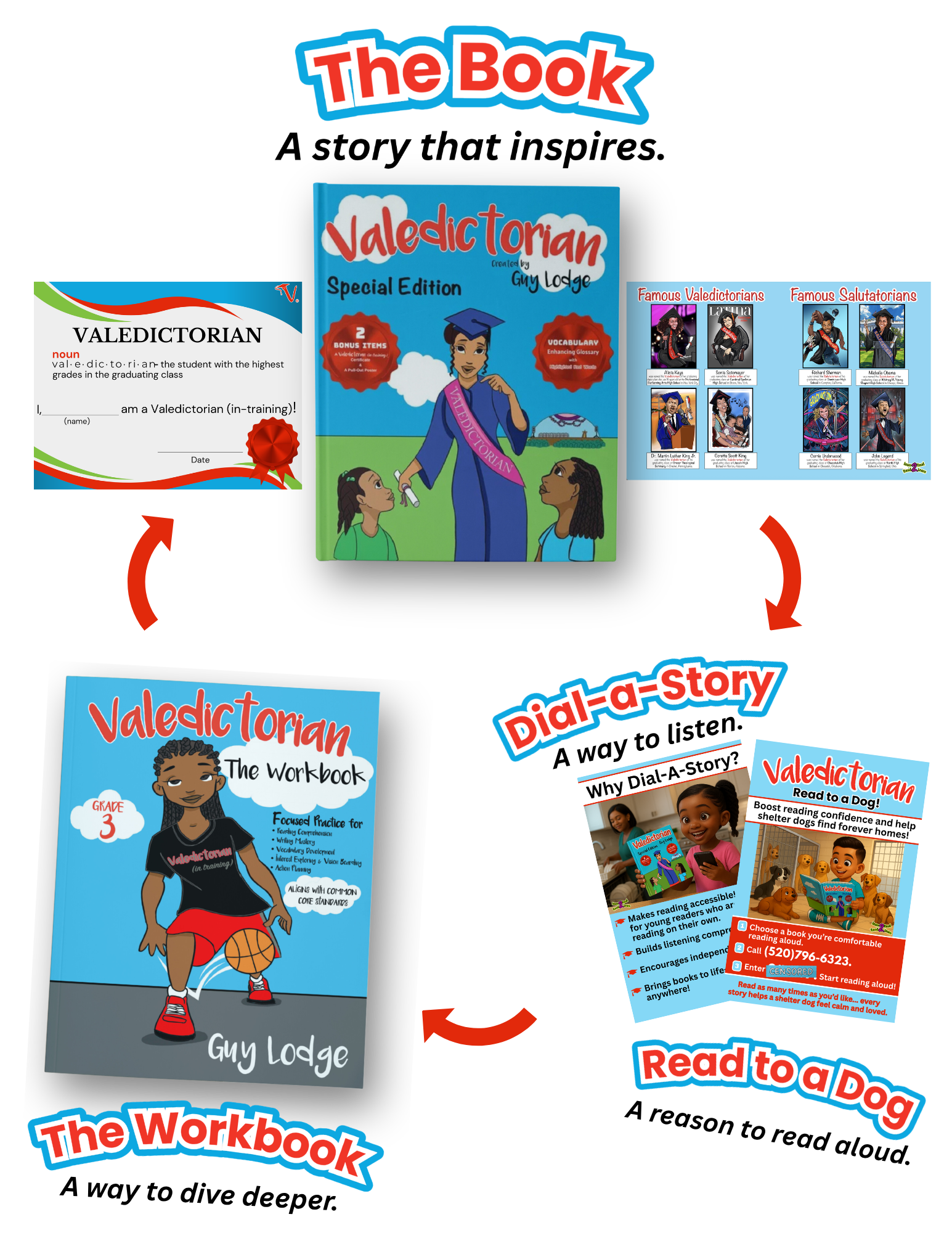
Today, that original story has grown into four connected literacy experiences that help children
listen, read aloud, practice essential skills, and build a stronger identity as capable learners.
Each experience serves a different purpose. Together, they create a continuous literacy journey
that extends the impact of the book far beyond the final page.
One book. Four connected experiences. One mission: build lifelong readers.
&

Now Included With Every Copy of Valedictorian
Children who are not yet reading independently can call and listen to the story. As their reading skills grow, they can return to the same book and read it aloud to help comfort shelter dogs.
No subscription or additional program purchase is required. Both experiences work by
phone, without an app or internet access.
Meet the Four Experiences
Each experience gives children a different way to connect with the same story. Together, they move children from inspiration to listening, purposeful reading, and guided practice.
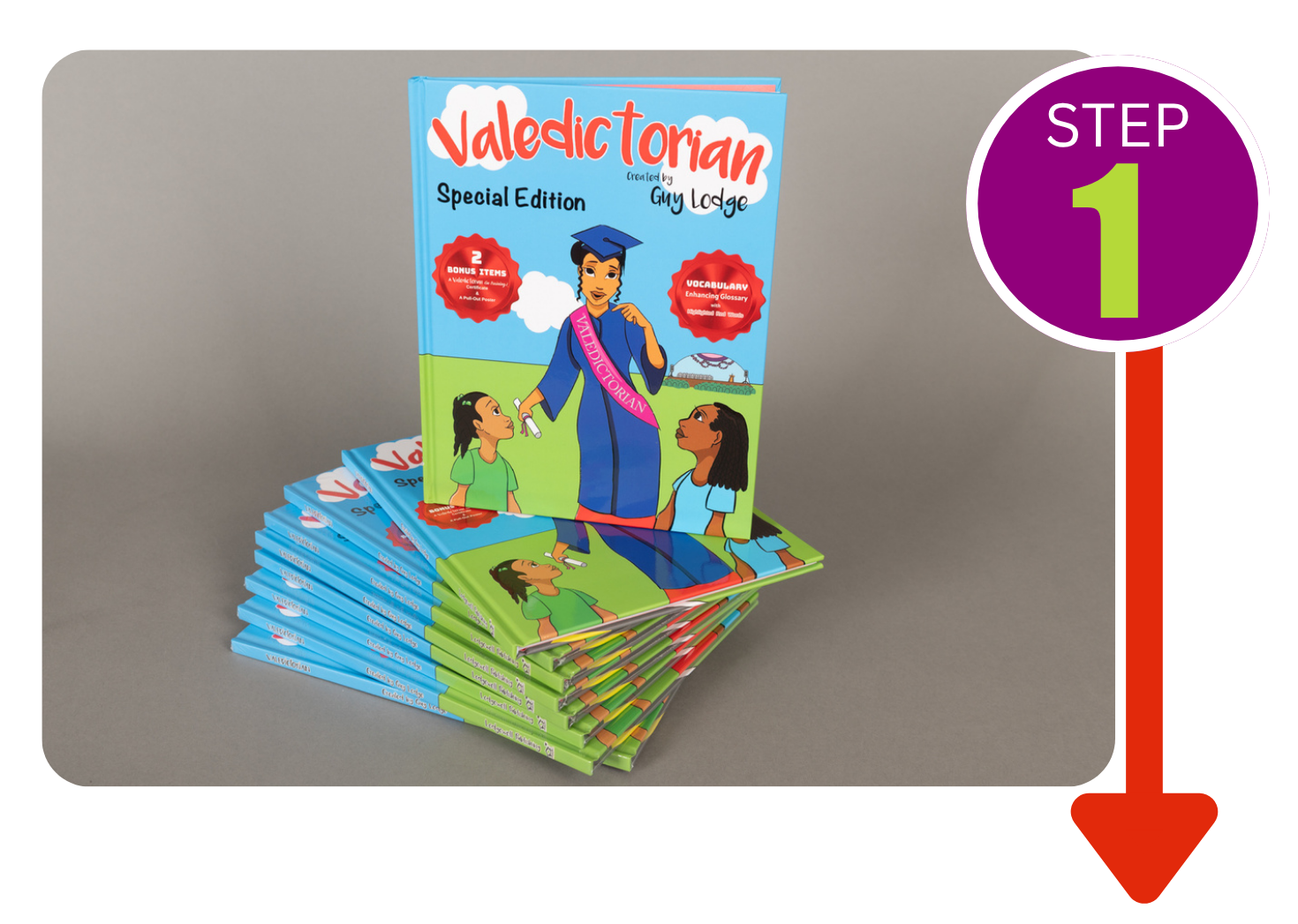
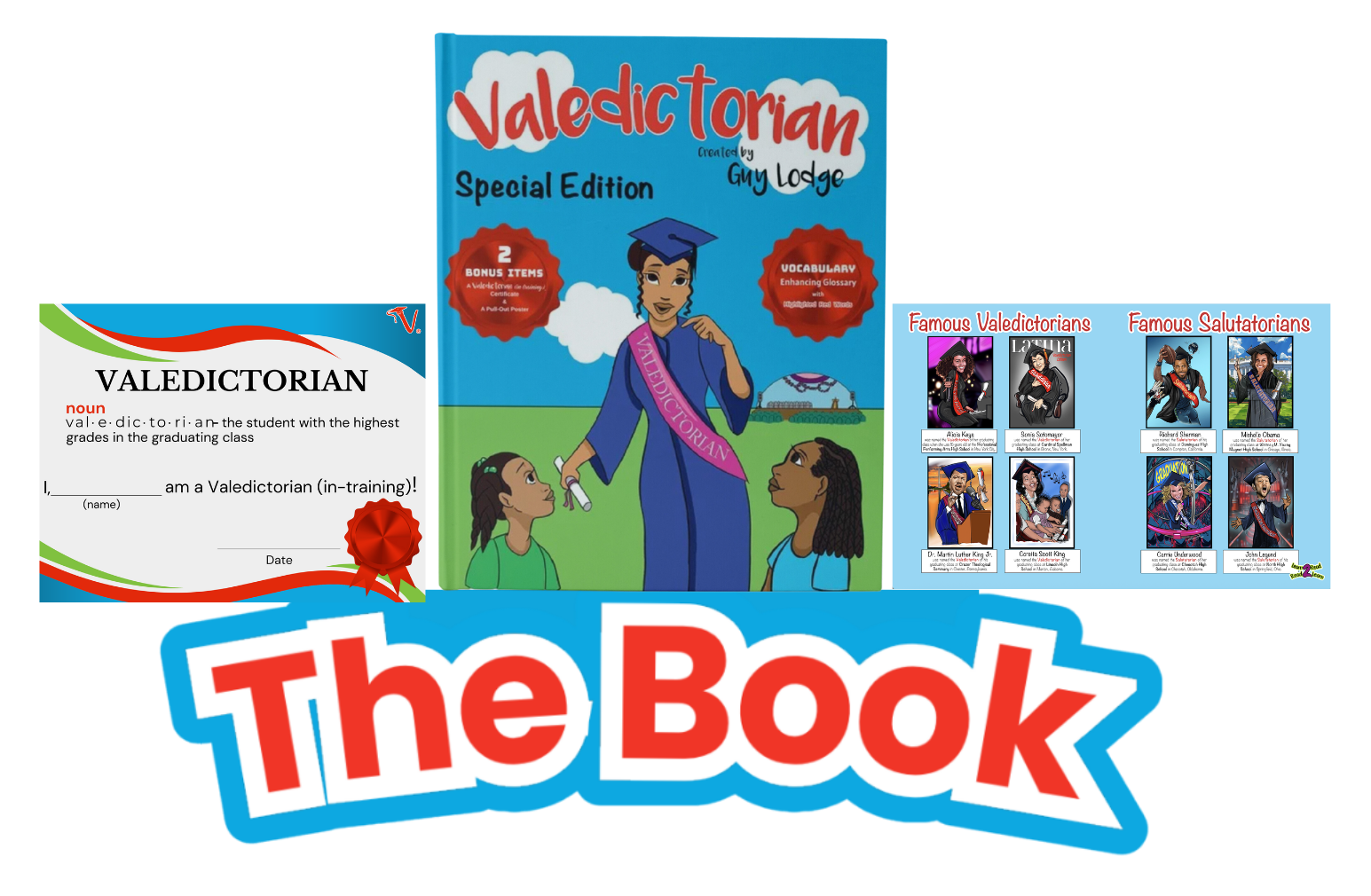
01. The Book
Identity Begins Here
Valedictorian introduces children to academic excellence through an empowering story that
encourages them to dream big, believe in themselves, and see themselves as capable learners.
Primary benefit:
Builds academic identity, motivation, and self-belief.
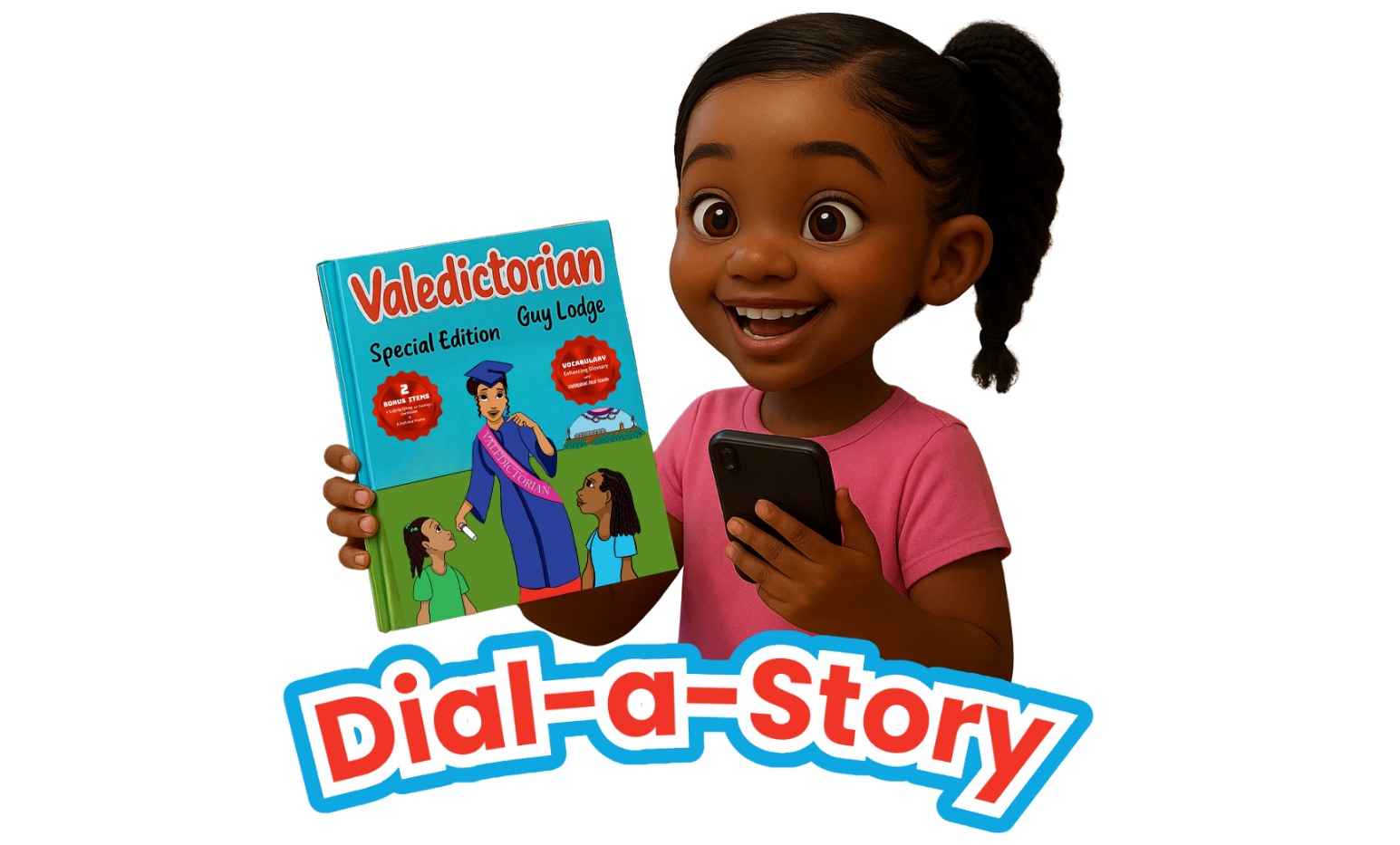
02. Dial-a-Story
A Way to Listen
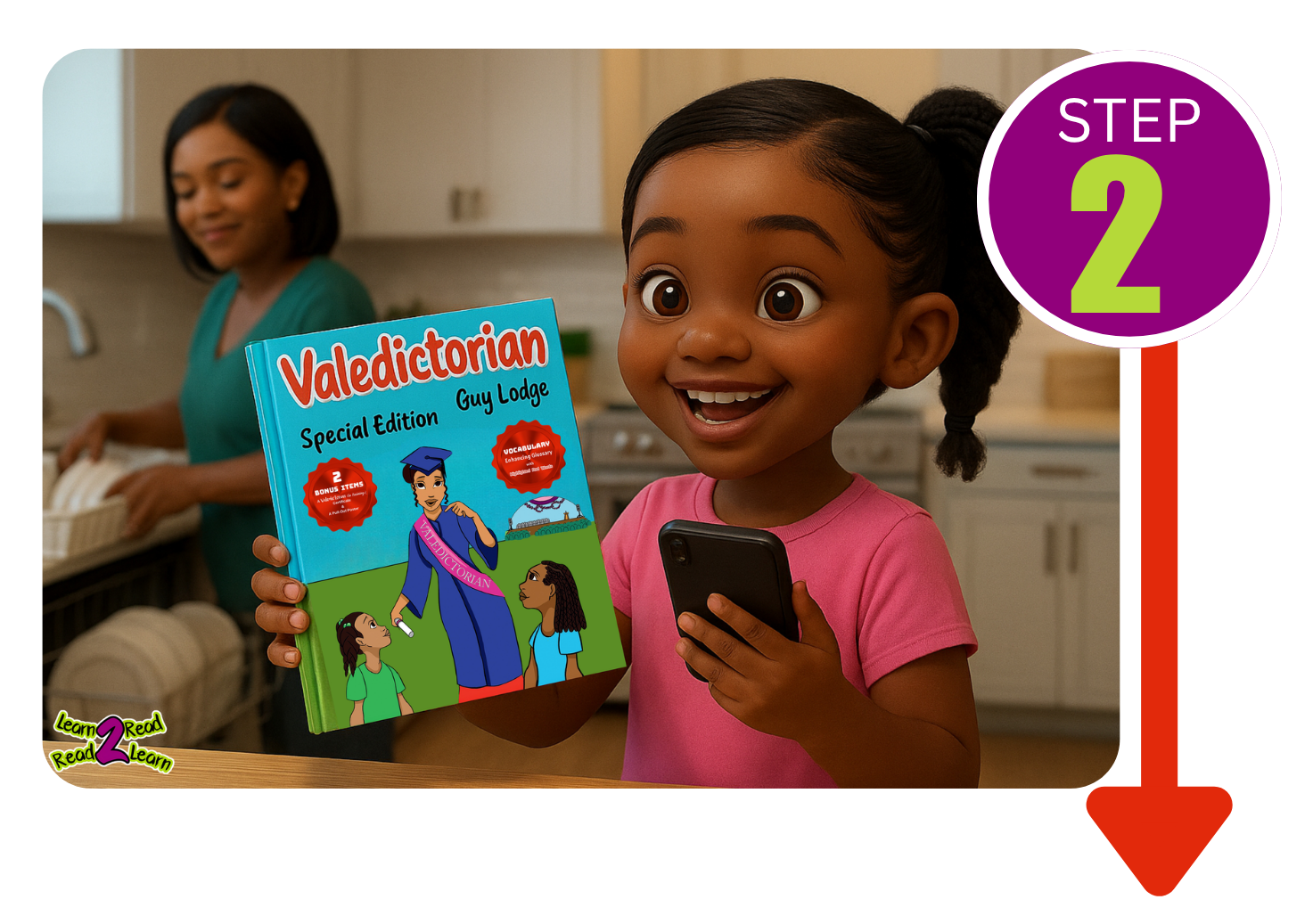
Children can call from any phone and listen to Valedictorian read aloud. Repeated listening supports vocabulary, comprehension, fluency, and confidence without requiring internet access, an app, or a computer.
Primary benefit:
Provides accessible modeled reading and repeated exposure to the story.
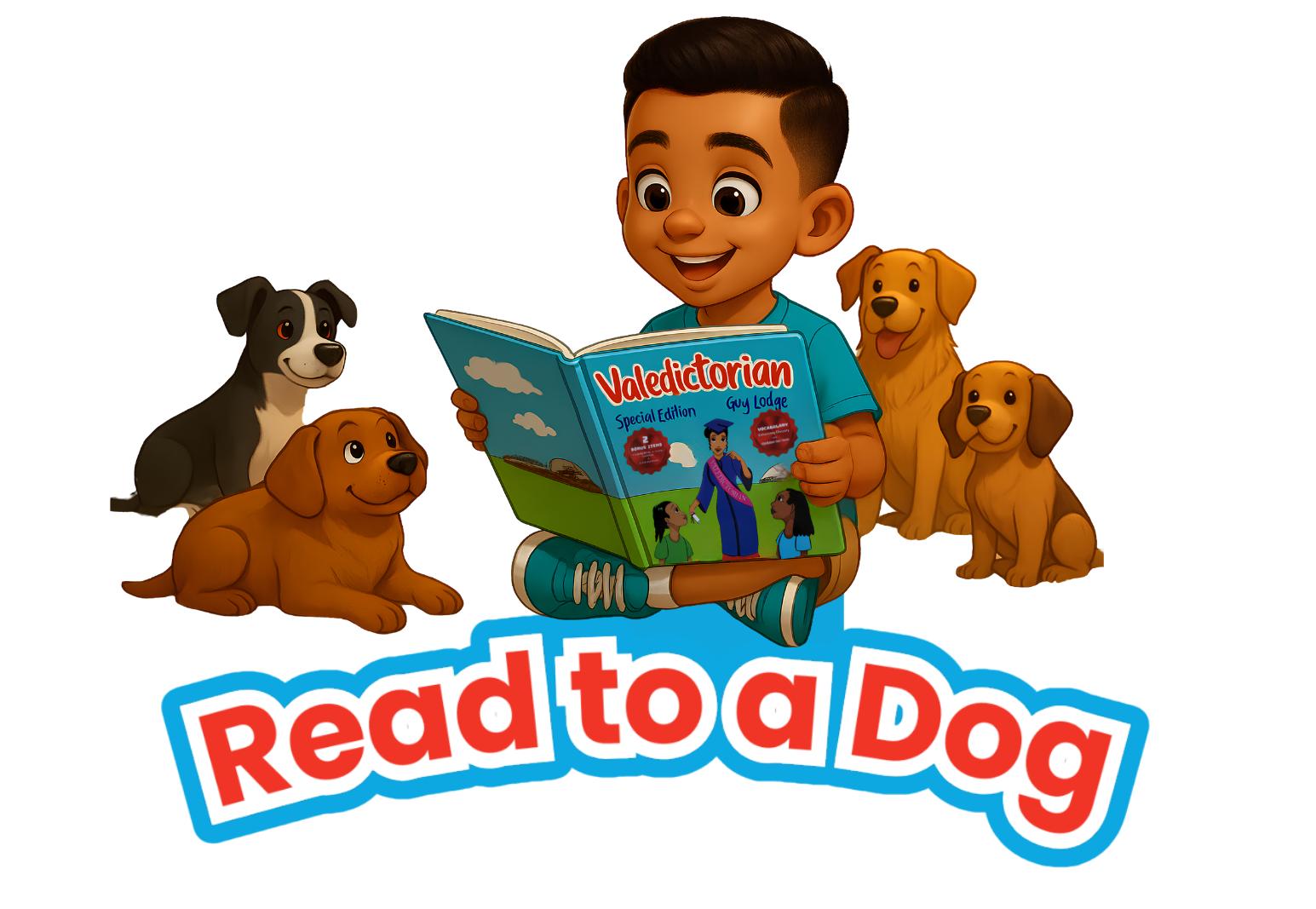
03. Read to a Dog
A Reason to Read
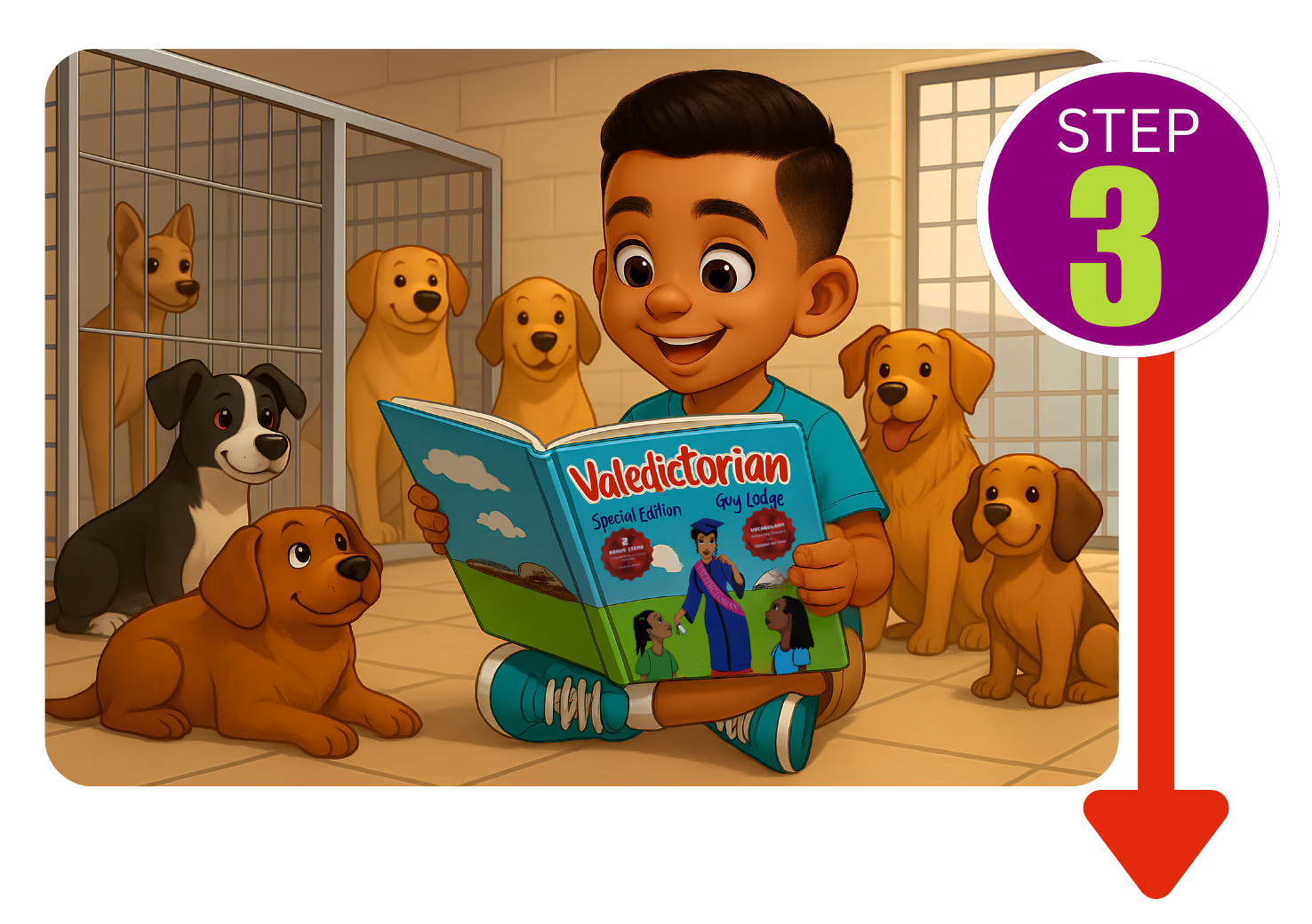
When able, children read Valedictorian aloud over the phone to help calm shelter dogs. This meaningful mission gives reading a real purpose while helping children build fluency, confidence, empathy, and reading stamina.
Primary benefit:
Children read longer and more consistently because their reading has purpose.
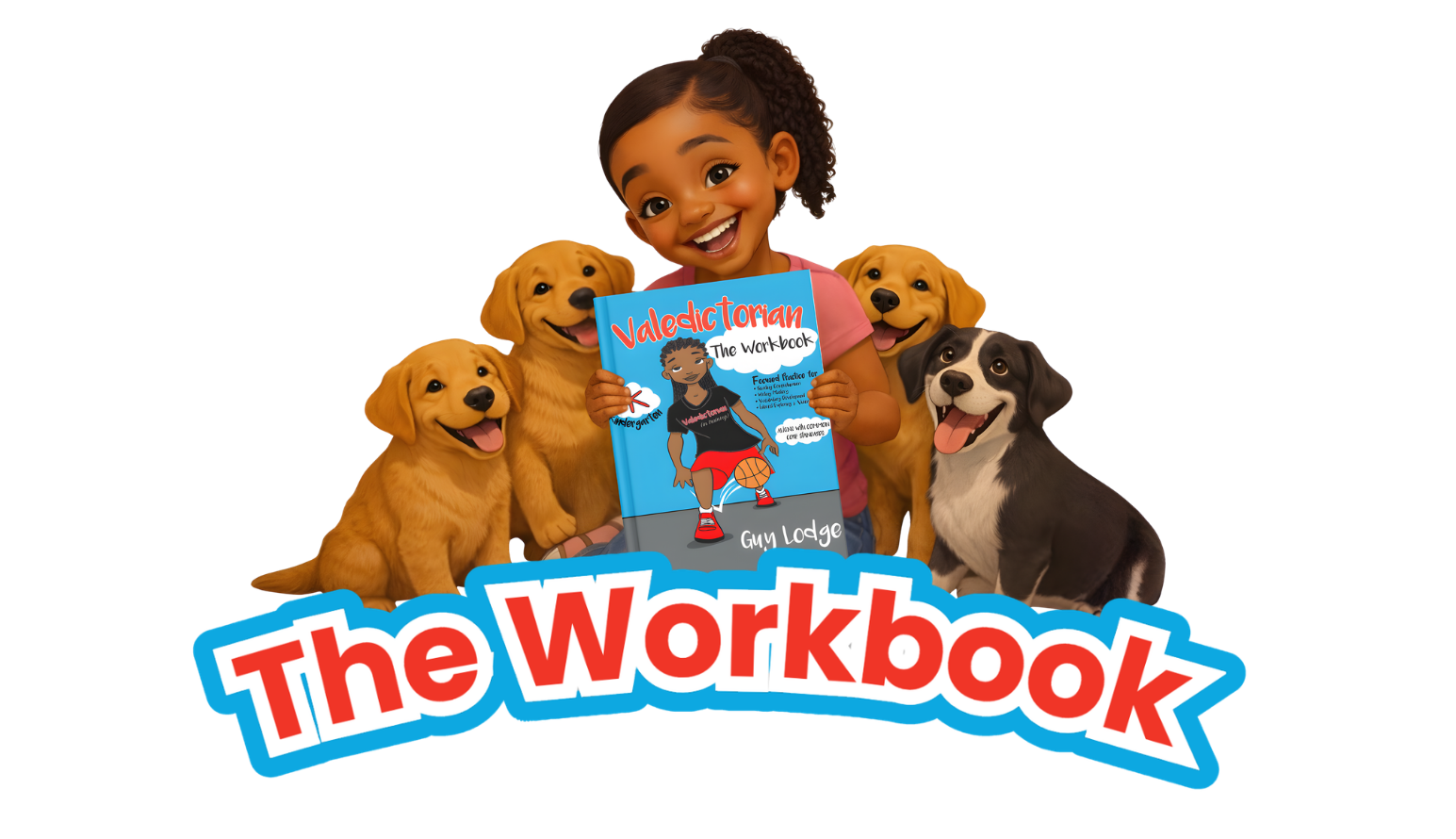
04. The Workbook
A Way to Go Deeper
Valedictorian: The Workbook extends the story through reading, writing, reading comprehension, goal-setting, and self-reflection activities that transform inspiration into purposeful practice.
Primary benefit:
Transforms inspiration into purposeful practice while strengthening literacy skills, confidence, goals, and academic identity.
Each experience is grounded in research on literacy development, motivation, repetition, identity,
and purposeful practice.

Additional Tools for Success
Helping children develop lifelong learning habits.
Oversized Vision Board (And Then Dream Bigger)

Large 24"x36" board for goal-setting and creativity.
How the Ecosystem Works
One Book. Four Ways to Grow.
1. Be Inspired
Children meet characters who dream big, work hard, and believe in what is possible.
2. Listen and Learn
First they listen. Then they read.
Children who are not yet reading independently can listen to Valedictorian from any phone.
3. Read With Purpose
As children begin reading independently, they can practice reading Valedictorian aloud while
using their voices to comfort shelter dogs.

4. Reflect and Practice
Reading, writing, goal-setting, and self-reflection activities help children apply the lessons of the story.
- Final Outcome:
Confident Readers Who Believe in Themselves
Children do more than finish a book. They build literacy skills, reading confidence, empathy, and a stronger academic identity.
Inspiration begins the journey. Purpose and practice help it grow.
The Science Behind the Ecosystem
Each experience serves a distinct purpose. Together, they help children move from inspiration to understanding, purposeful reading, and continued practice.
1. Academic Identity and Self-Belief Matter
Children are more likely to engage in learning when they see themselves as capable students and readers.
Valedictorian introduces children to academic excellence, goal-setting, discipline, and possibility in a positive and relatable way. It helps children begin to see themselves as capable learners with meaningful goals for their future while building confidence in who they are becoming.
Research Supports This Approach
Research on “possible selves” by Oyserman, Bybee, and Terry (2006) found that future identities are more likely to influence academic behavior when students connect who they hope to become with meaningful strategies for getting there.
Valedictorian gives children an early vision of themselves as future scholars, leaders, and high achievers while connecting that identity to goal-setting, discipline, effort, and academic excellence.
Core principle:
Children must be able to see success before they can begin working toward it.
2. Modeled Reading, Repeated Listening, and Independence Matter
Hearing fluent reading helps children understand how language should sound, including pacing, expression, pronunciation, and phrasing.
Repeated listening also strengthens familiarity with words, vocabulary, story structure, fluency, retention, and comprehension. Dial-a-Story allows children to hear Valedictorian as many times as they need, from any phone and without requiring internet access, an app, or adult
technical support.
Research Supports This Approach
The National Reading Panel (2000) identified modeled and repeated oral reading as important supports for fluency, word recognition, comprehension, and oral language development. Sénéchal and Cornell (1993) found that repeated read-alouds improved vocabulary acquisition and story understanding in young children, while Samuels (1979) connected repeated reading with stronger automaticity, decoding speed, and reading confidence.
By combining fluent modeling, repetition, and independent access, Dial-a-Story helps children move from listening to understanding, and from familiarity to confidence.
Core principle:
Children learn by hearing strong models and returning to them repeatedly.
3. Purpose Matters
Reading practice becomes more powerful when children have a meaningful reason to keep
going. Read to a Dog gives students that purpose by allowing them to read Valedictorian aloud over the phone to help comfort shelter dogs and improve their chances of finding forever homes.
That mission encourages children to read longer, more often, and with greater enthusiasm
while strengthening fluency, stamina, confidence, and empathy.
Research Supports This Approach
A UC Davis study (2010) reported that students participating in dog-assisted reading programs increased reading fluency by 12 percent in just ten weeks, without additional tutoring.
Research by Kirnan, Siminerio, and Wong connected reading-to-dog programs with stronger
empathy, perspective-taking, patience, and emotional regulation. A University of British Columbia study (2020) also found that purpose-based reading activities can increase motivation, stamina, and emotional regulation.
Shelter Impact
69% to Less Than 1%
Program results from one participating shelter reported that euthanasia for anxiety-related behavior declined from 69% to less than 1% after recordings of children reading aloud were introduced.
This outcome shows that the service component of Read to a Dog is not symbolic. Children strengthen their reading skills while helping create calmer, more adoptable shelter dogs.
By combining oral reading practice with service and empathy, Read to a Dog transforms reading
from an assignment into a mission. Children strengthen their skills while discovering that their voices can make a difference.
Core principle:
Purpose transforms reading practice into something children want to do.
4. Practice and Reflection Matter
Reading growth becomes stronger when children have opportunities to apply, practice, and reflect on what they have learned.
Valedictorian: The Workbook extends the story through reading comprehension, writing,
goal-setting, and self-reflection activities that reinforce both literacy skills and academic
identity. Children also track their progress through certificates and milestone markers and use a Vision Board to connect their learning to their goals and future possibilities.
By combining literacy practice with self-discovery, goal-setting, and self-reflection, the
workbook helps children move beyond reading about excellence and begin developing the skills,
habits, and confidence needed to pursue it.
Research Supports This Approach
The National Reading Panel (2000) identified phonemic awareness, phonics, fluency,
vocabulary, and comprehension as essential components of effective reading instruction.
Research by Graham and Hebert (2010) also found that writing about what students read can
improve reading comprehension. Schunk (2003) connected goal-setting and self-evaluation
with stronger self-efficacy in reading and writing. These principles are reflected throughout
Valedictorian: The Workbook through literacy practice, writing, progress tracking, goal setting, and self-reflection.
Core principle:
Inspiration begins with the story. Purposeful practice strengthens skills, while reflection helps children recognize their growth.
Four Different Experiences. One Connected Learning Process.
Valedictorian inspires.
Dial-a-Story models.
Read to a Dog motivates.
Valedictorian: The Workbook reinforces.
Together, they create a literacy experience designed to help children grow as readers and believe in themselves as learners.
View the Research Briefs
Explore the research, program design, and educational rationale behind the two phone-based literacy experiences.
Measuring What Matters
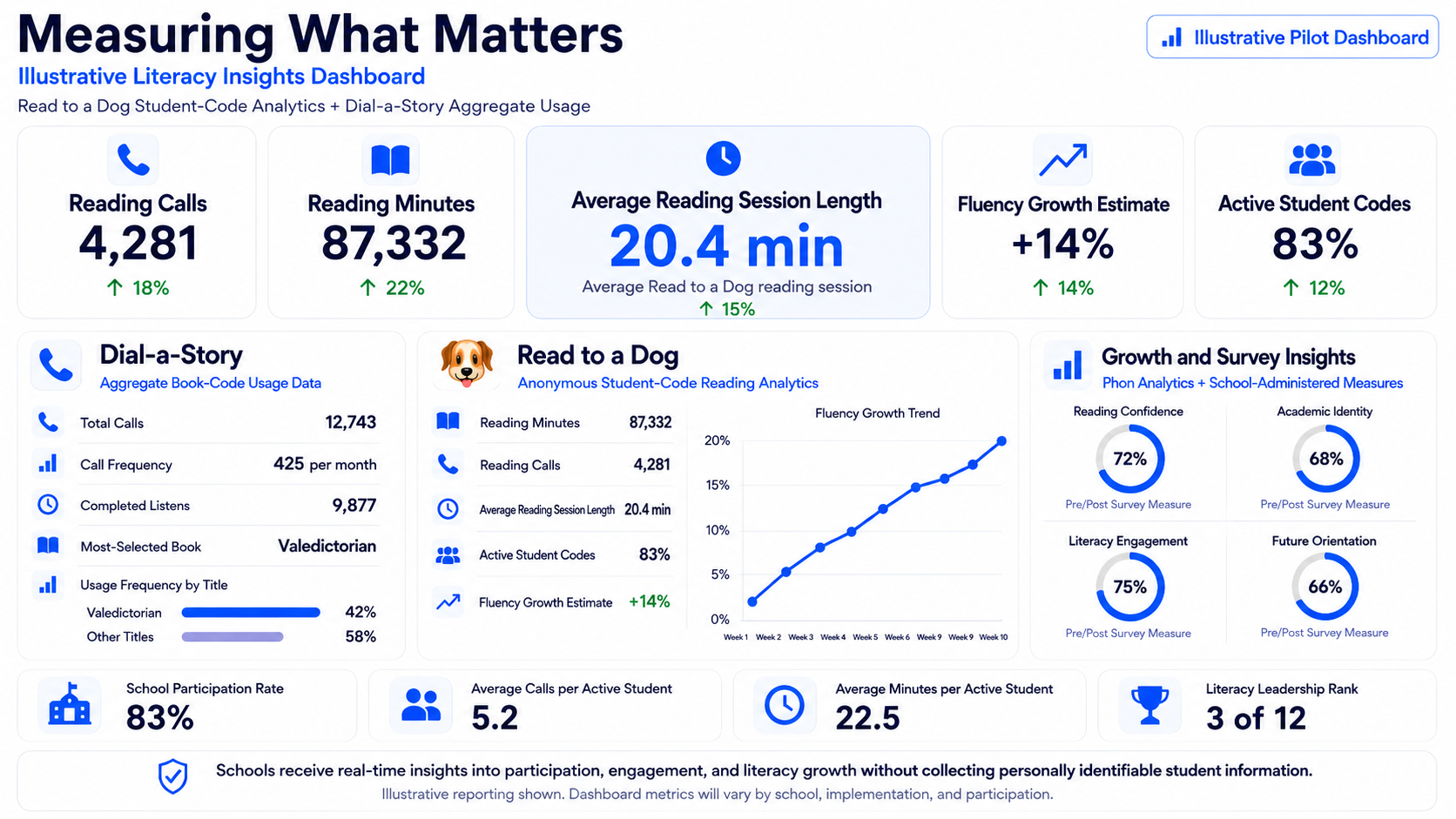
Schools deserve more than participation reports. They deserve meaningful insight into how students are practicing and progressing.
Read to a Dog provides detailed reporting through anonymous student codes, including reading calls, reading minutes, average reading session length, participation, and fluency-growth estimates. Dial-a-Story provides aggregate reporting through assigned book codes, including total calls, call frequency, completed listens, and book-selection activity. The phone system does not collect student names or identify individual Dial-a-Story listeners.
What Schools Can See
Read to a Dog Analytics
Anonymous student codes allow schools to review individual reading activity without sending student names to the phone system. Reports can help schools understand participation, consistency, and reading progress over time.
Total monthly reading minutes by student code
Total reading calls by student code
Average reading session length by student code
Student participation and reading consistency
Fluency-growth estimates, when available
School-level reading trends and progress
Dial-a-Story Aggregate Usage
Assigned book codes provide aggregate insight into how frequently children are accessing and completing the audio experience. Dial-a-Story does not identify individual listeners.
Total calls
Call frequency
Completed listens
Most-selected book
Usage frequency by title
Pre- and Post-Program Measures
Age-appropriate student surveys help schools understand how children feel about reading and how their attitudes, confidence, habits, and engagement may change during the program.
Schools may examine:
Reading enjoyment
Confidence when reading aloud
Reading at home
Reading pride
Belief that practice leads to improvement
Learning self-efficacy
Engagement with phone-based stories
Positive feelings about helping shelter dogs
Open-ended student feedback
Matched pre- and post-survey questions can be used to examine changes in reading enjoyment, read-aloud confidence, and reading-at-home habits. Additional survey questions provide insight into reading pride, motivation, self-belief, program engagement, and the emotional impact of reading to help shelter dogs.
Literacy growth is measured separately through Read to a Dog analytics and school-administered literacy assessments.
Friendly Competition That Builds School Pride
Schools can compare school-level reading minutes, participation, consistency, and growth with other participating schools.
Recognition categories may include:
- Most Reading Minutes
- Highest Participation
- Most Consistent School Participation
- Greatest Measured Literacy Growth
- Literacy Leadership Recognition
Competition remains at the school or classroom level. Individual students are never publicly ranked.
Visibility That Can Attract Support
Participating schools can use documented engagement and growth data to demonstrate their
impact to families, sponsors, donors, and community partners.
Top participating schools may also be featured with direct links to approved school donation
pages, giving supporters a clear way to invest in their literacy efforts.
Participation does not guarantee funding. It gives schools stronger evidence, increased visibility,
and a more compelling story to share with potential supporters.
Better insight helps schools celebrate progress, strengthen implementation, and demonstrate the value of student engagement.
Privacy Statement
Schools receive detailed Read to a Dog reports through anonymous student reading codes. Diala-Story provides aggregate usage reporting through assigned book codes, including total calls, call frequency, completed listens, and book-selection activity. Dial-a-Story does not identify individual listeners. The phone system does not collect student names or other personally identifiable student information.
Dashboard Disclaimer
Illustrative pilot dashboard. Read to a Dog reports may include reading minutes, calls, average reading session length, participation, and fluency-growth estimates associated with anonymous student codes. Dial-a-Story reporting is limited to aggregate book-code usage, including total calls, call frequency, completed listens, and book-selection activity. It does not identify individual listeners or measure individual literacy growth. Reading confidence, reading attitudes, self-belief, and similar outcomes require school-administered surveys or assessments. Available reporting will vary by school and implementation. The phone system does not collect student names or other personally identifiable student information.
Bring the Valedictorian Literacy Ecosystem to Your School or Community
Give children more than a book. Give them four connected experiences that help them listen, read with purpose, strengthen essential skills, and believe in who they are becoming.
Discover how the Valedictorian Literacy Ecosystem can support the students, families, and communities you serve.
Research-Based Early Literacy
Designed for Schools. Built for Families. Powered by Purpose.
Arizona ESA Family?
Your ESA Funds Can Help Build a Stronger Reader
Learn 2 Read Read 2 Learn® is an Arizona ESA Curriculum Vendor.
Explore the Valedictorian K-8 Literacy Program, curriculum-supported educational materials,
and ways to purchase using ClassWallet.